Archivo de la categoría: Proyecto Primates

Proyecto Primates Panamá

Yerré, el mono araña negro de Panamá Este y Darién

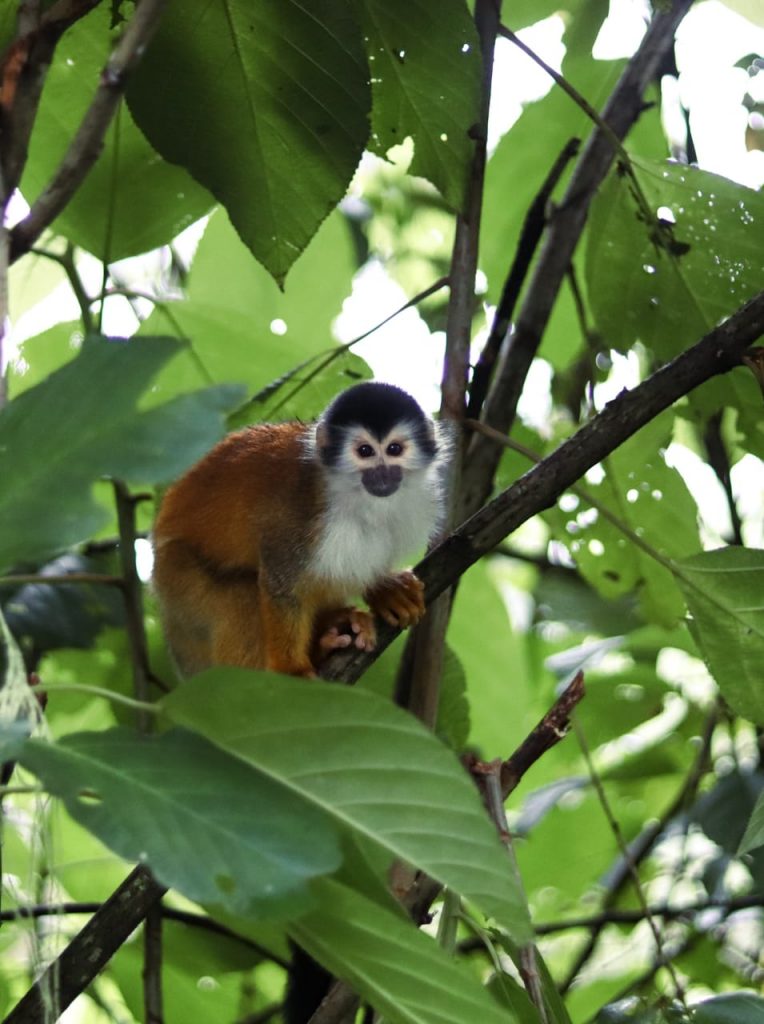
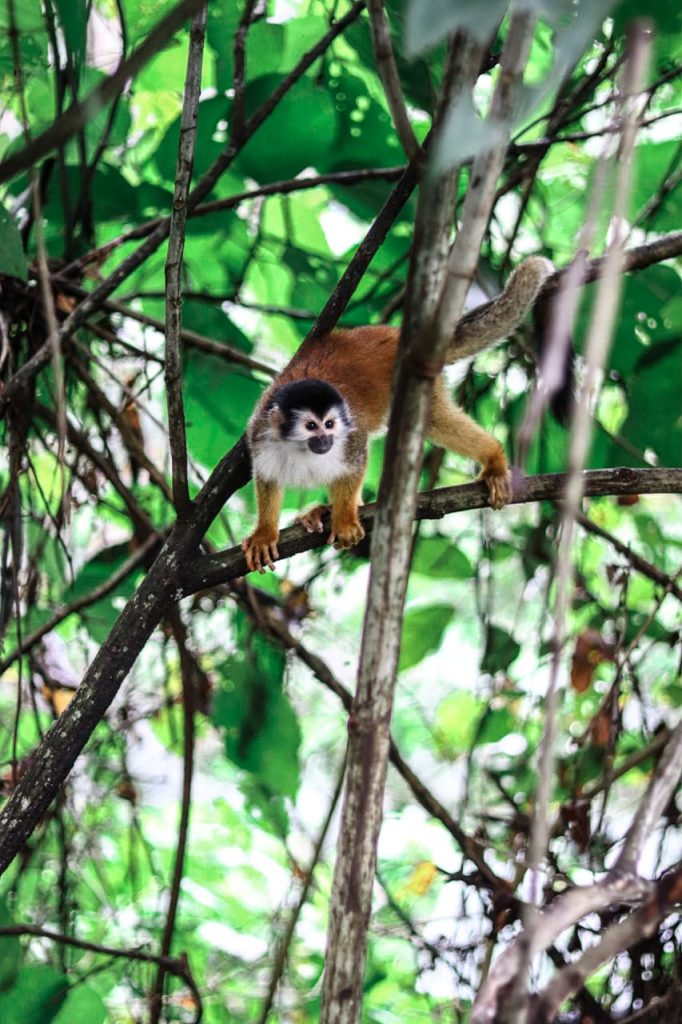
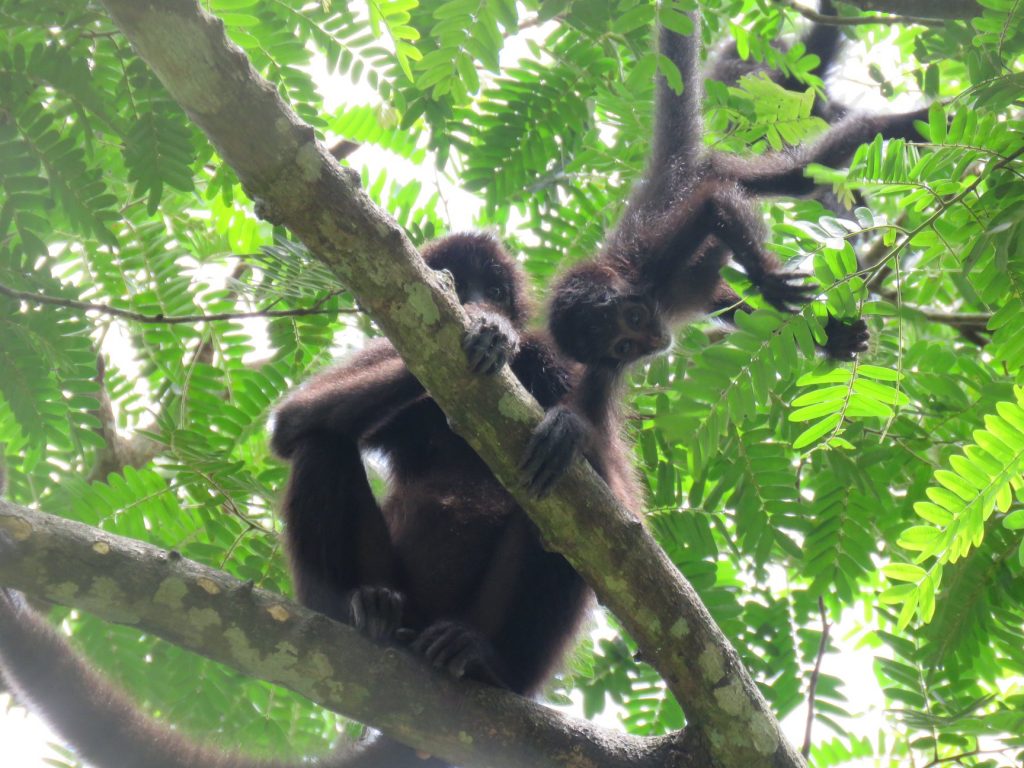
Ellas son Gasira y Nala del Este de Panamá.

Gasira y Nala son yerré o monos araña del Este de Panamá.

Nombre científico: Ateles fusciceps.
Nombre común: Mono araña negro, mono negro, yerré.
Esta especie de mono araña sólo se registra desde el Centro Este del Istmo de Panamá hasta Ecuador.
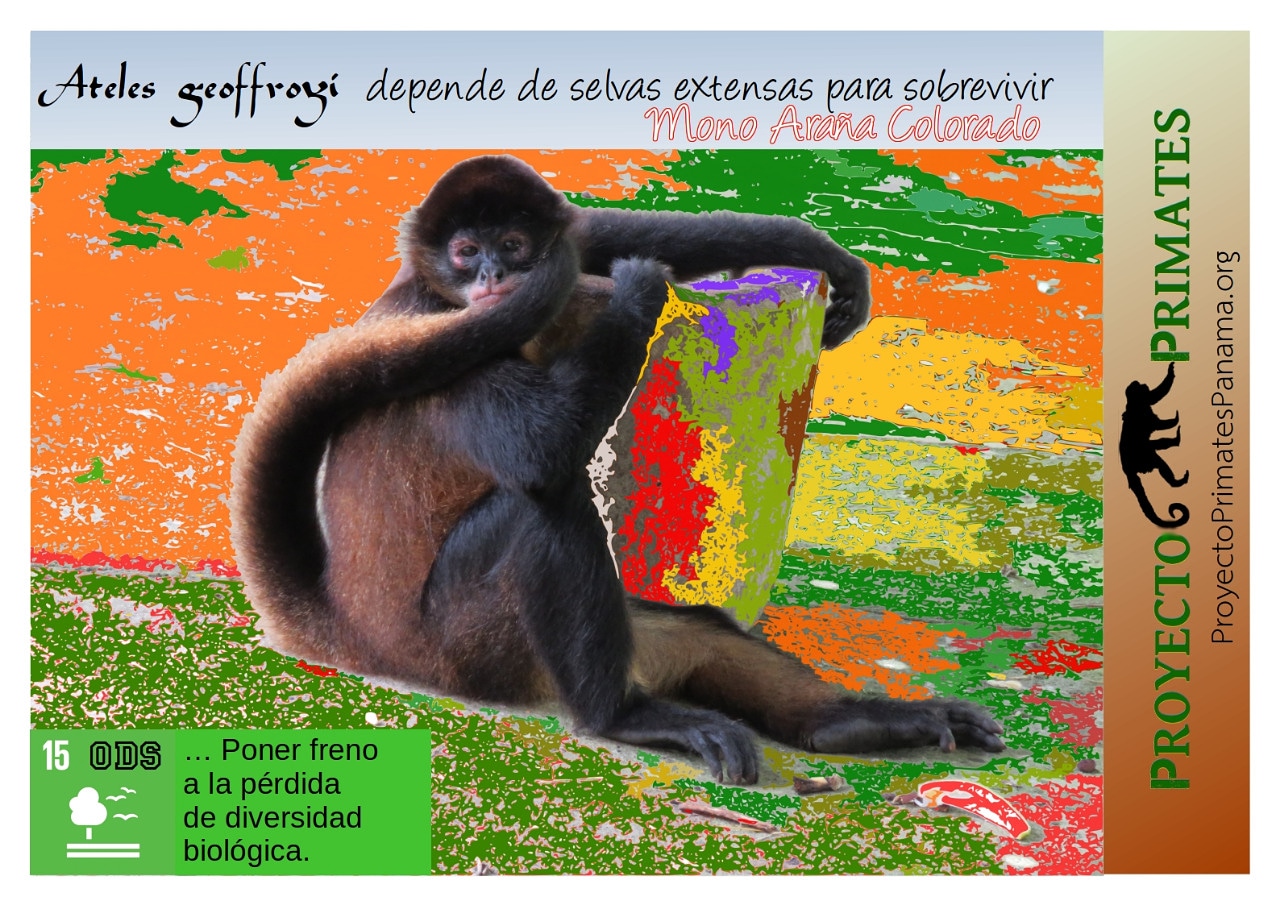
Todas las especies de monos arañas requieren extensas selvas para sobrevivir con poblaciones saludables.

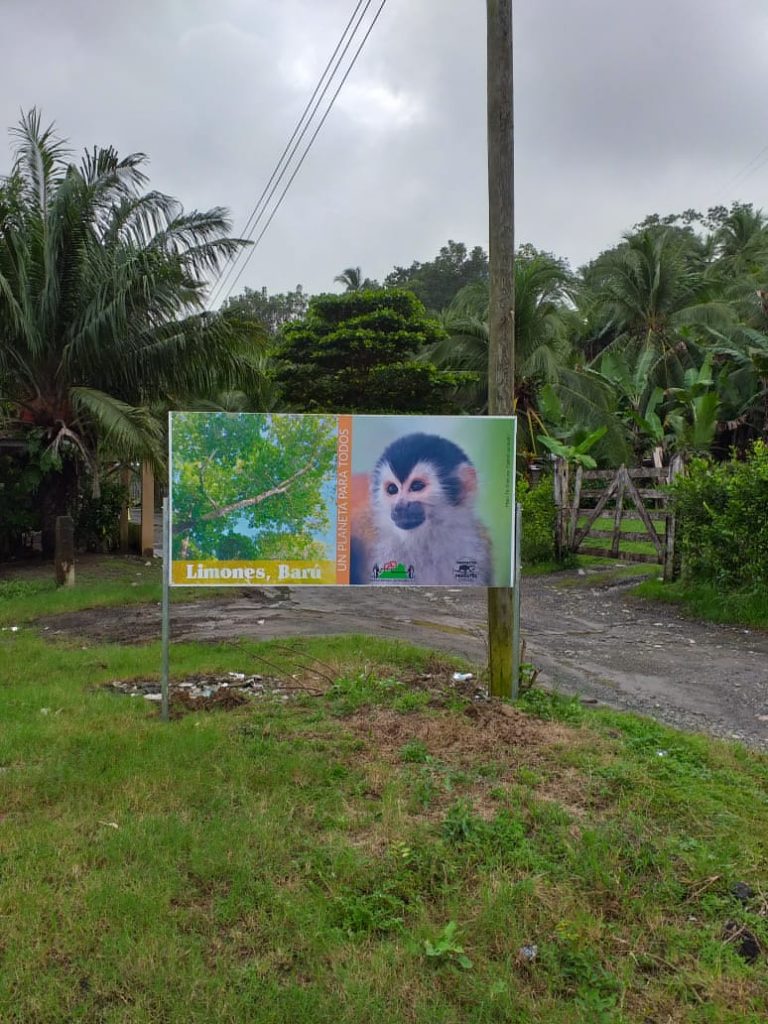
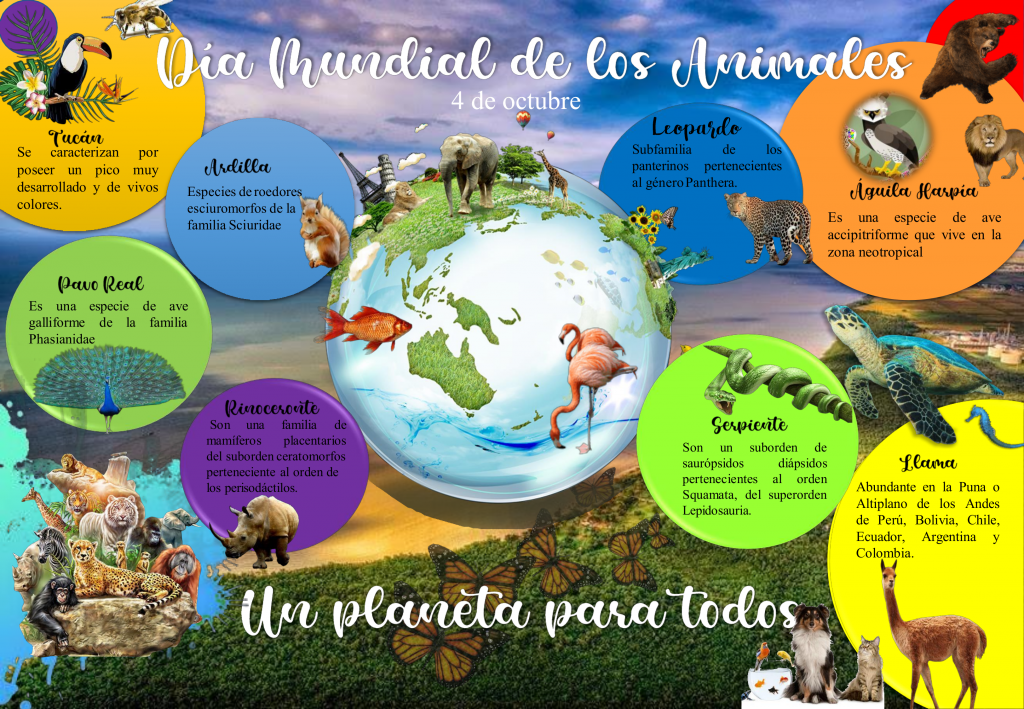
Un planeta para todos!

Ariel Rodríguez-Vargas
Proyecto Primates Panamá
ProyectoPrimatesPanama@gmail.com

22 de Abril de 2020 es el Día Mundial de la Tierra. Hace más de un mes un silencio y un vacío de actividades humanas se tomó los pueblos y ciudades del mundo. Es la especie humana confinada en sus hogares y desalojada, incluso a la fuerza, de las calles, plazas y espacios públicos. Es la figura de los efectos de una pandemia de un síndrome respiratorio denominado COVID-19 que azota al mundo y lo tiene casi de rodillas. La gente siente temor de enfermarse o de enfermar a sus seres queridos vulnerables al virus SARS-CoV-2. Es una epidemia que ha golpeado a todo el mundo y amenaza con hacer estragos en países que ya sufren de mil calamidades y otras epidemias endémicas letales. Los números de COVID-19 todavía son irrisorios a los millones de muertos de malaria en África y Asia en los últimos 20 años. Que la ciencia y la conciencia política mundial hagan su trabajo.

22 de abril – Día Mundial de La Tierra

Los ecosistemas con todos los elementos biólógicos y abióticos son la base de la vida humana en el planeta. Recordemos que la humanidad como tal, llegó al planeta cuando el paraíso o el ecosistema estaba listo para recibirnos. El recibimiento no es gratuito. Muchos o millones de seres son parásitos y depredadores y nosotros no estamos exentos de ser víctimas de ellos. Hemos aprendido a intimidar a los macrodepredadores, pero aún no dominamos, ni conocemos a los enemigos más terribles de la humanidad: los virus y otros microorganismos infecciosos. Ellos son los verdaderos reyes del planeta. Se acaba la especie humana y ellos seguirán en la biosfera, incluso cristalizados.

No hay opción, hay que aprender a convivir con todos los seres vivos del planeta. Hay que respetar sus espacios, sus ambientes y mantener la distancia de aquellos que no han evolucionado a vivir cercano a nosotros. La humanidad se ha enseñoreado sobre casi todo lo existente en el planeta, le ha perdido el respeto a la naturaleza, pero en muchas ocasiones, ella es capaz de devolverle la afrenta.

Durante el último mes de cuarenta total en el mundo, muchas especies de la vida silvestre han regresado a los lugares donde las actividades humanas los habían desplazado desde hace décadas o cientos de años. Así vemos en las calles de ciudades vacías, desde cabras de montaña en Gales, zarigüeyas en Colombia, alces en Canadá, venados en Japón, hormigueros en Brazil, linces en España, jabalíes en Alemania, gamos en Inglaterra, etc. Este momento fugaz es un telón de enseñanza moral y ambiental que nos debe llevar a la pregunta: ¿Qué hemos hecho en el planeta? ¿Somos los dueños absolutos del mundo? ¿Quién reparará nuestros daños ambientales? ¿Es justo y bueno destruir por vanidad humana, la naturaleza? ¿Vale la pena convertir todo un ecosistema en un gran potrero o en un inmenso cultivo de arroz? ¿Por qué no pensamos que el planeta es para todos y que todos los seres necesitan conservar espacios vitales para su supervivencia?

La vida silvestre que conocemos en el planeta lucha por su supervivencia de manera instintiva e incluso razonada como ocurre con algunos primates. Al igual que los humanos, ellos deben defenderse de los enemigos naturales. Además, ellos están expuestos a mil patógenos, algunos letales que diezman sus poblaciones e incluso las pueden extinguir. Por ejemplo, los murciélagos como especies han logrado sobrevivir durante millones de años al ataque de innumerables especies de virus, bacterias u hongos. La naturaleza dura es implacable y también es implacable cuando el hombre abusando de su condición de especie dominante invade los espacios silvestres, más allá de lo debido o de la ética.

Sirva este día para recordarnos a todos, que la Tierra es un lugar para todas las especies existentes, es un planeta para todos, y es nuestro deber como especie humana, coadyuvar en educar a las nuevas generaciones, a respetarla, protegerla y nunca ser abusadores de ella, ya que las consecuencias de los abusos terminan siendo asoladoras. El humano tiene espacios de acción suficientes para desarrollarse plenamente y el día que aprendamos a ponernos límites como especie, con conocimiento, leyes, ética y valores, ese día estaremos construyendo una humanidad con futuro bueno y armonía natural.

Todos a favor de la madre Tierra y nunca contra ella.

Expo Fotográfica 2020

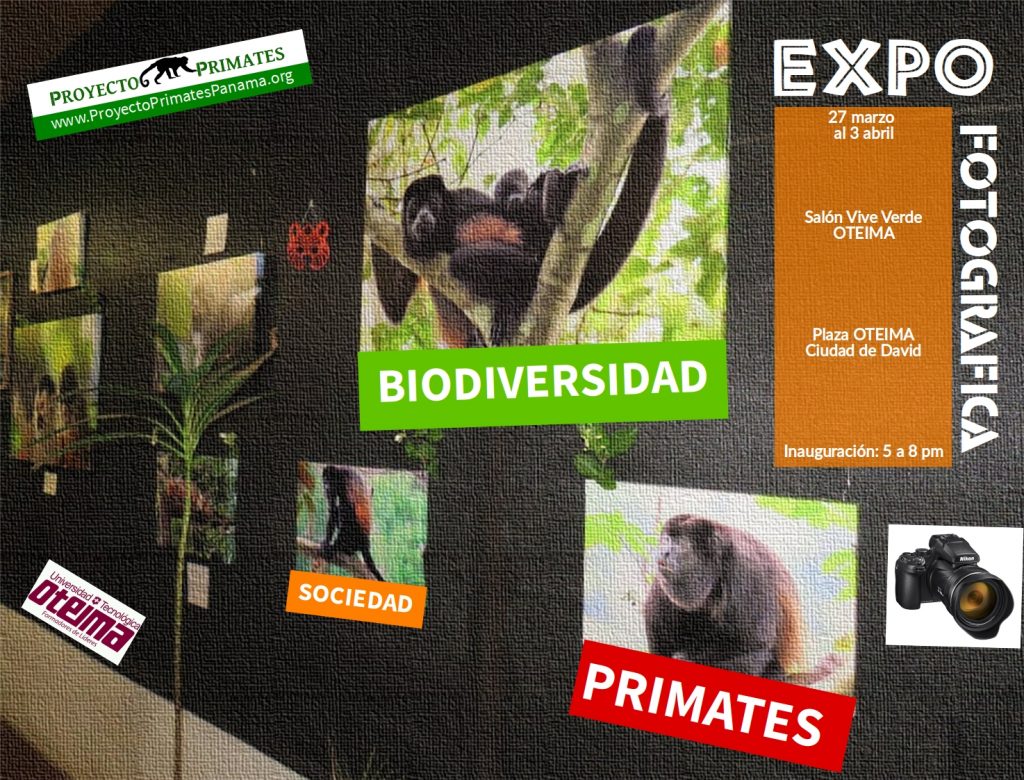
Este año 2020 la Expo Fotográfica de Proyecto Primates Panamá tiene de patrocinador principal a la Universidad Tecnológica OTEIMA, a realizarse del 27 de marzo al 3 de abril de 2020 en las instalaciones principales de OTEIMA en la ciudad de David.

La inauguración del evento será el día 27 de marzo a las 5:00 de la tarde en la cual habrá una conferencia magistral corta sobre el tema de la exposición: Biodiversidad, Primates y Sociedad, que será dictada por el Dr. Ariel Rodríguez Vargas.

Esta actividad será abierta a todo público y con acceso libre. Las obras pueden ser adquiridas y los fondos serán donados a Proyecto Primates Panamá.
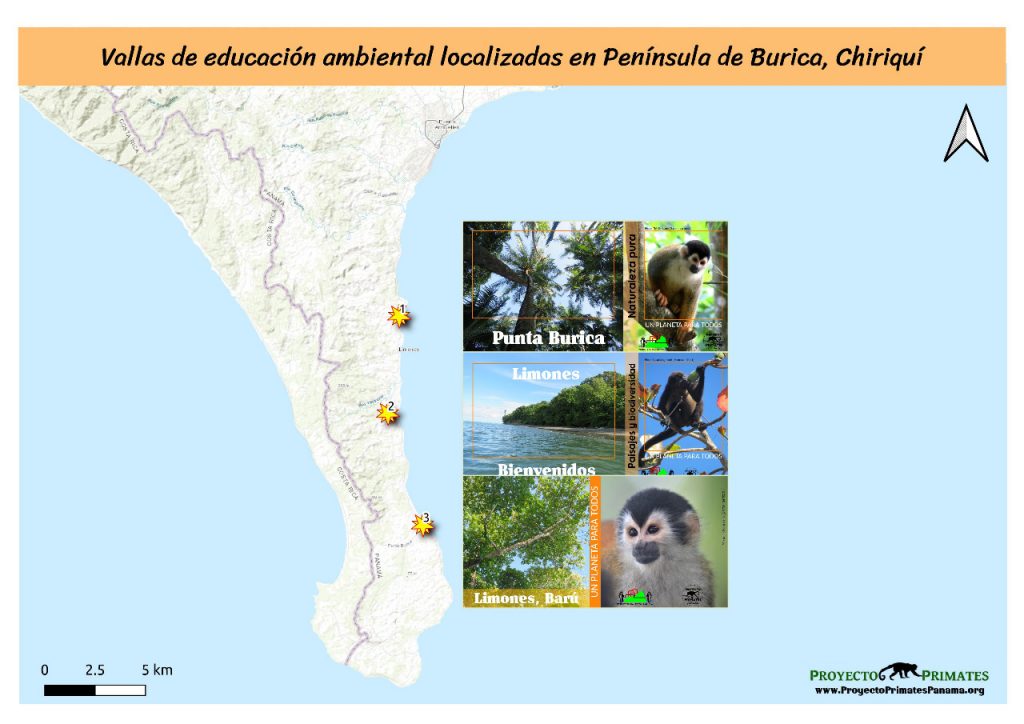
Development of Monkey Bridges and Sustainable Monitoring Networks in the Burica Peninsula

Development of Monkey Bridges and Sustainable Monitoring Networks in the Burica Peninsula, Chiriquí, Panama

Oscar Thiercelin and Greig Hospes
McGill University

Host: Proyecto Primates Panamá

Host Contacts: Dr. Ariel Rodríguez-Vargas

Email: ProyectoPrimatesPanama@gmail.com


April 30th, 2020

Introduction

This research project took place along the Burica Peninsula, a small stretch of land in the lowland regions of Chiriquí, Panama. This area holds large ecological significance in that it is the last remaining habitat of the Mono Tití Chiricano (Saimiri oerstedii), a highly endangered species of monkey. The Mono Tití used to be spread over a much larger area of Panama, particularly across the Chiriquí province, but now occupies only this small peninsula in Panama’s southwest corner and a small area in Costa Rica. As well as the Tití, the region is also home to two other species of monkey: Mono Aullador (Alouatta palliata) and Mono Cariblanco (Cebus imitator) (Proyecto Primates Panamá, 2019), plus a large variety of other forms of wildlife. On top of the ecological significance of the region, there are also many communities that run down the length of this peninsula including Puerto Armuelles, Las Mellizas, Yerbazales, Caña Blanca, Limones, Bella Vista, and others. These villages are full of very kind and welcoming people that have formed an incredible sense of community in the area. 

In the last year, the area has had the introduction of a new highway that connects the communities of the coast to the rest of Chiriquí. While this new road (Carretera PTP-Limones) seems to be a boon to the communities, allowing easier transport and increased connectivity with the surrounding areas, it may also have significant detrimental effects on the surrounding wildlife. Due to the nature of the highway it cuts straight through many areas previously covered with trees and vegetation. For this reason, the local habitats have been disturbed and fragmented which can be seriously harmful to the local species (Tigas et al., 2002; Haddad et al., 2015). The splitting of one habitat into many smaller habitats separated by a barrier – in this case the new highway – is a very straightforward example of habitat fragmentation (Boinski et al., 1998; Cuaron, 2000). In this particular instance, the fragmentation is especially dangerous to local wildlife populations because the presence of the new road brings cars that can strike and kill passing animals. During our discussions with members of the communities we found that approximately 15% of those interviewed had seen monkeys hit and killed by passing traffic within the last year since the road’s construction. This number only accounts for monkeys, and we are sure that there are many other species of animals harmed by the traffic and the new road. These anthropological effects in a habitat can have drastic changes on the ecosystem health and composition through processes such as trophic cascades or other large-scale ecological interactions (Silliman & Bertness, 2002).

After discussing with members of the community, we found that the people had much care for the wildlife of the area and topics such as conservation were very important to them. This response was larger than we had predicted, with approximately 95% of those interviewed stating that the conservation of the habitats around them was of serious concern. Unfortunately, even with such a positive response to conservation there appeared to be little to no action taking place within the communities. We believe that this is due to a lack of communication and organization, because when the community members were asked if they would be interested in participating in some form of group to aid in conservation initiatives we saw that about 75% of individuals were willing and even excited at the idea. These results were encouraging to us because they showed us that with time, communication, and organization, we will be able to do something meaningful with these communities. 

In order to tackle the aforementioned issues and projects, we are working with Proyecto Primates Panama, an NGO based in Chiriquí, Panama whose primary goals are to promote sustainable development and conservation of biodiversity through environmental education and social empowerment. This group is run by Dr. Ariel Rodriguez-Vargas and Dra. Laura Patiño Cano, doctors in Biology and Organic Chemistry respectively. The organization was initiated in 2016 to begin their environmental conservation initiatives, working with help from researchers, students, and communities to further their goal of primate conservation, particularly in the lowland regions of Chiriquí (Proyecto Primates Panamá, 2019). The group is largely focussed on the study and conservation of primates and they do a great job of increasing community knowledge and involvement through workshops, education, monitoring tours, and other such actions. 

Our initial work in the area gave us two goals to direct our work. The first of which is to combat the habitat fragmentation that has occurred in the area due to the implementation of the new highway. The introduction of corridors to allow animals to safely cross between fragmented habitats can be an effective strategy of lessening the negative effects of habitat isolation and fragmentation (Dobson et al. 1999). In the case of the Burica Peninsula, Proyecto Primates has begun to counteract this fragmentation through the creation of bridges between the treetops over the highway to allow monkeys (and other arboreal creatures) to safely cross without the chance of being struck by the cars and busses that frequent the area. As of now, the group has put five temporary bridges in place. Our work was to, through direct observation and discussion with members of the communities, analyze the use of these temporary bridges and the habits of the monkeys of the area in order to find which of the temporary bridges are the most effective and to find out where else along the highway new bridges would be most beneficial. As well, the plan is to convert the temporary bridges to more permanent structures so that this step forward against fragmentation will last.

Our next goal is to assist the communities in the creation of a sustainable ecological monitoring organization to aid in the efforts currently being run by Proyecto Primates. The idea is to bring the communities together on a topic that is important to them but that currently lacks organization. Due to the high level of interest in conservation topics within the communities we believe that the introduction of a monitoring network will both bring the communities together to a common goal as well as providing a sustainable flow of information for those working at Proyecto Primates. Unfortunately, due to extenuating circumstances we were not able to be in the community for the implementation of this network, but we have provided our host organization with the information necessary and a template for how to promote the creation of this organization. The hope is that once this network is up and running, the people of the communities will continue to contribute to the monitoring and conservation efforts on their own accord in order to provide Proyecto Primates with continuous, important information that will aid in both community cooperation and conservation initiatives. 

Methods

As mentioned before, this project could be separated into two different sub-parts, nonetheless linked on multiple levels. The first part would be to create a map of Punta Burica and indicating where on the new highway new permanent bio-corridors could be built. In order to do so, we opted for a cross-sectional research design to gather new data. The second part is to create a sustainable monitoring network to permanently gather new information around the themes of the Punta Burica monkeys and global conservation. A participatory research design seemed logically suitable to conduct this part of the project.

The Map

The methodology chosen to create the most accurate map possible was to conduct a meta-analysis; to combine multiple sets of data gathered from various sources.  We were able to go through with some of these sources but others had to be dropped because the research project was cut short. The first and main part of this exploratory research was to conduct a survey. This survey was designed to last around 15 mins to not be too invasive while still being able to gather both qualitative and quantitative data.

 There were multiple objectives of this survey in order to maximize its utility for the research. Firstly, it aimed to gather preliminary information concerning conservation, environment issues in the area, and the monkeys in general. The goal of this first part was to have a global understanding of the Punta Burica in order to better design the rest of the research. The second part of the survey was focusing on the different pattern of community organization in place in the region. This part of the survey was here to help design the participatory part of the research. And thirdly, the survey aimed to gather data on where to install new monkey bridges. We decided that it would be more relevant to gather information on the monkeys based on the inhabitant’s observations rather than our own. It was more cost effective, time effective and more realistic, considering our low number of researchers, to opt for a strategy based on the people who have the most knowledge of the area. 

Considering the little time we had to conduct the survey, we combined three sampling strategies to maximize the number of participants and the relevance of the answers. First, we decided to follow the rules of convenience sampling. We would interview anyone we would encounter walking about Punta Burica. The population of the area isn’t very dense so opting for this sampling strategy and staying in and around the main communities really helped us survey a significant amount of inhabitants. Secondly, following the first sampling strategy we decided to conduct snowball sampling. We would ask every participant at the end of the survey if they knew anyone else that could be interested in participating in the survey as well. And finally, we had decided to add a purposive sampling strategy in order to maximize the relevance of the data gathered. Indeed, we decided to interview both the bus drivers and SENAFRONT members, as we figured they were going back and forth along the highway multiple times a day and therefore were more likely to have information on the monkeys, their presence near the road, and their use of the bio-corridors. We had time to interview a decent amount of bus drivers, but the research was cut before having the time to interview enough SENAFRONT officers for their part of the result to be significant. 

Below is the complete survey conducted during internship as well as its introduction designed to fulfill the ethical requirement of interviewing individuals.

Hola, somos estudiantes trabajando con la organización Proyecto Primates. Está organización lucha para la conservación de los monos de la península Burica. Estamos realizando entrevistas con los habitantes de la península para contribuir con el fin de esta organización. La información sería igualmente utilizada en el proyecto de investigación para nuestra universidad. El objetivo de esta entrevista es saber cómo los habitantes ven la conservación de los monos, como se organizan y donde es necesario construir puentes para los monos. Por esas razones quisiéramos saber si podemos entrevistarlo, la entrevista duraría entre 5 y 15 minutos pero usted podría parar la entrevista en cualquier momento o decidir de no responder a cualquier pregunta. 

  1. Vive en la costa?
  2. Hace cuanto tiempo que vive aquí?
  3. Como se llama su comunidad?
  4. Sabe que tipo de mono hay en la región?
  5. A usted le importa la conservación de los monos?
  6. Le parece que la gente le protegen? 
  7. Sabe qué peligro tiene los monos?
  8. Sabe cómo ayudar a los monos?
  9. Ha visto monos usar los puentes?
  10. Donde?
  11. Cuál tipo de mono?
  12. Ha visto monos cruzar por la carretera?
  13. Donde?
  14. Cuál tipo de mono?
  15. Ha visto monos atropellados?
  16. Donde?
  17. Cuál tipo de mono?
  18. Usted cree que es necesario construir más puente para los monos?
  19. Donde?
  20. Participa a una organización?
  21. Participó a una organización?
  22. Se puede ser como
    • club de padre familia
    • junto de agua
    • ambiental
    • pecadores
    • ganadores
    • agricoles 
    • iglesia (cuál tipo)
    • fútbol 
  23. Le interesa participar a alguna organización de la comunidad, una que no existe ya pero puede tratar de temas como el ambiente o la protection de los monos?
  24. Cual es su nombre?
  25. Cual es su Edad?
  26. Que haces en la vida? Que es su trabajo?
  27. Tiene un número de teléfono?

Luckily, we had time to conduct this survey during the two first weeks of internship. Moreover, we registered the coordinates of any data giving us locations to be able to implement them on the map. 

We were also planning to gather information and data on the monkey populations based on the findings of previous studies from our supervisors, the types of terrain, the presence of living fences or the presence of some of the preferred fruit trees by the monkeys like the Espavé, the Caimito and the Higo. Sadly, we did not have the opportunity to collect all this additional data to perfect the results of our map.

However, the map was done on GIS, a system allowing us to create maps using external data and satellites images. We were therefore able to add different types of land cover to the map based on satellite images like forest cover, pasture, and urban areas.

The sustainable monitoring network

The second goal of the project is to develop a sustainable monitoring network; it aims to have a permanent flow of information crucial for the conservation of the monkeys and its habitats. More precisely the objectives would be to encourage members of the community to be engaged in the preservation of the biodiversity of the area by giving them a role in monitoring the population of monkeys.

This part of the research project was the most affected by the drastic change of situation and therefore had to go through severe changes. The paper will firstly state what was originally planned in the methodology and then it will present the changes forced on the design.

  1. The original design

A community-based participatory research was selected to fulfill the requirement of a sustainable monitoring network and to analyse its functionality and its benefits. The goal would be to develop a communication platform used to share any useful information on the various monkey populations. Instead of creating an entire platform, we thought it would be relevant to use an already existing one, Whatsapp. It is an encrypted messaging app which can be used to send messages, photos, videos, audio recordings and locations. We chose this particular mobile application for its practicality but also because based on our observations it seems to be the most used communication platform in the country and in the area. Furthermore, using this application could give more freedom and thus a broader spectrum in the information received. The plan would be to create group chats in which we can add the willing participants for them to send any information on the monkeys that they might find appropriate to help. This strategy could be helpful in creating a large data set, unifying various data from different sources. It would be a means for the members of the community to participate in protecting the biodiversity that surrounds them. To maximize the data, it is important to set broad overarching guidelines so that it could encompass any information participants have, for example if there are monkeys seen crossing a bridge, or if they have a video of a troop of howler monkeys by the road. 

The most crucial part of the project would be to achieve a high participation rate, as this participatory research design relies on the willingness of the population to participate. Furthermore, for the research to be more complete and more accurate, it would be essential to gather participants from different social, generational and geographical parts of the communities. To reach this goal multiple participants recruitment strategies will be combined. The first one is to contact every member who said yes when asked if they were willing to participate in a communal organization around themes like the protection of monkeys (Fig. 6). We would send them a message presenting the project and asking if they would be inclined to participate. The second strategy would be to put up posters (Fig. 3) in key places determined by the preliminary research including churches, the football club, schools, and bus stations. We would have also asked people directly if they were willing to participate, we were expecting to spend a good amount of time in the community which would have allowed us to develop this strategy. Finally, we would have used the snowball method once again and ask already participating members if they knew anyone else who might be interested in joining the monitoring network.

Combining all these strategies will increase inclusivity but there is one part of the population that this project can’t reach: the individuals without a phone. To try to counter this problem, we will ask the participants with smartphones and internet access to act as ambassadors, meaning they could share the information collected by other members of the community.

  1. Modification made due to Covid-19 crisis.

Due to our abrupt departure from Panama before finishing the internship, most of the design and the decision for this project had to be revised. The new strategy adopted is to develop a template of the sustainable monitoring network. We would create a guide on how to develop this project which could be helpful for our host organization to implement this project in the future. It consists of the steps that we think should be taken in order to establish the base of a monitoring network in the Burica Peninsula. Then because it was not possible to produce any tangible results to analyze, we will conduct a literature review combined with observations on the field and expected results.

We certify that this research has been conducted following the Code of Ethics of Mcgill University and that we have completed the TCPS 2: CORE.

Results

Map and Bridges

This map was created in the software ArcGIS (Fig. 1a). The map covers most of the area of the Burica Peninsula with the primary focus being the Carretera PTP-Limones. On the map are many important elements of the area. To start, there is a layer across the entire area that denotes the use of the land through color coordination (as described in the legend, Fig. 1b). Next, we added a green pin for each coordinate at which a temporary bridge already exists. Then coordinates were indicated by blue shapes depending on their relevance. To begin, blue star shapes were added to represent the locations that we believe a new bridge would be most beneficial. The blue circular symbol is used to signify other potential bridge locations based on tree positioning or suggestions from inhabitants of the area. The blue square shape denotes a location that could be useful for a bridge, however this location was found through aerial photographs rather than direct observation or recommendations from locals. And finally, a blue diamond was added for a location at which we observed monkeys (Mono Aullador) along the highway with our own eyes.

The information for this map came from a few different sources. Each coordinate was recorded on location during a walk along the length of the carretera. This was accomplished using the maps application on our cell phones and recording the coordinates as we got to the location of interest, along with notes about the location. These locations of interest were found through conversations with residents of the area, or through direct observation of monkeys or locations where a bridge seemed easiest to implement and most beneficial. Once all of this information had been gathered it was collected into the map where it could be presented in an organized fashion.

Included in our discussions with locals, we also learned about the use of the existing bridges. Through these conversations we found that the further south we went down the peninsula the more use the bridges saw. To elaborate, the first bridge between PTP and Las Mellizas had the least observed use and the southernmost bridge outside of Limones had the most use, with a gradient of usage sightings between. This could be due to many potential factors that we will discuss later in this paper.  We also analyzed the patterns of monkey populations and bridge use. To this end, we looked at which monkeys were most often seen crossing the bridges and which monkeys were most often sighted crossing on the road. Our findings (displayed graphically in Fig. 2) show us that Mono Aullador are seen far more often than the two other species of monkeys in the area, both on the ground and on the bridges. As well, it seems the Mono Tití populations are making good use of the bridges as there have been almost twice as many sightings of Tití on a bridge compared to crossing the highway on the ground. Mono Cariblanco appear to be scarce in the region compared to the other two species but of the few recorded sightings about half were using the bridges.

Template for the monitoring network

  • Elect a number devoted to the purpose of the monitoring network with Whatsapp.
  • Create the group chats.
  • Determine the administrators of the group chats who will have the power to add and remove numbers in the chat.
  • Put up the posters (Figure 3) in the predetermined key places (Churches, Football club, restaurant, bus stops).
  • When someone contacts the number wanting to participate, this standardized message is sent to them.

This same message can also be sent to individuals who have shown an interest to participate and have shared their number:

Hola, muchas gracias por escribirnos. (if they have contacted the number themselves)

Estamos creando unos grupos de chat para reunir información acerca de los monos en la Península Burica. El objetivo de este grupo es de colectar datos sobre de los monos para ayudar a protegerlos.

¿Sabía usted qué hay monos Concon, Cariblanca y Titi cerca de donde vive?  Nuestra organización “Proyecto Primates” está trabajando para protegerlos a ellos y a su hábitat. ¡Pero necesitamos su ayuda! ¿Podría usted mandarnos un mensaje cuando vea algunos monos? y si es posible, decirnos cuántos eran, qué tipo de mono eran, donde estaban y cuando los vio. De igual manera si tienen fotos o videos nos lo puede enviar. Cualquier información sobre los monos puede ser útil. 

Le pedimos encarecidamente no mandar mensajes inapropiados, si llegará a ocurrir nos reservamos el derecho de eliminar al que no respete las reglas. 

Si usted quiere participar mándenos un mensaje con su respuesta, su nombre y donde vive y nosotros procederemos a agregarle a un grupo de chat en WhatsApp con otros participantes. De igual manera si conoce alguna persona que podría estar interesada en participar puede darle ese número. 

Si tiene alguna pregunta no dude en preguntarnos. ¡Espero con interés poder trabajar con usted! (monkey Emoji)

  • After that, add them to a group chat depending on where they live.
  • Then you collect whatever information sent, photos can be used for the web sites, data can be added to the excel sheet we produce for the survey or to any other study done by Proyecto Primates Panamá.
  • If there are any other specific studies requiring the ambassadors help you can send a message to the chats to see who is willing to help and send new guidelines.
  • The group chat can also be used to send key information to participants regarding the primates and their habitat.
  • Can be used to organize meetings or activities for informing the participants of the cause and push the organization of this community-based conservation further.

Following these steps should lead to a correct realization of a sustainable community-based monitoring network. This new tool could help gathering data but could also be useful to start new projects with the community and can be seen as a base for a future more complete organization of the community to better integrate conservation in the area. 

The first question posed by participatory research projects is “will participation be high enough to have any significant results?”. If no one wants to participate this communication platform has no utility and all the effort put into this new incentive to protect the environment would be wasted. However, even if this project is very unlikely to have any negative impact on the communities because it is not invasive, for this project to have any ethical value, participation cannot be forced and the will to participate should come directly from the member of the community. Nonetheless, based on the preliminary survey we can expect participation rate to be significant enough. Indeed, we can see in Figure 4 that a very significant majority of individuals surveyed knew all three species of monkey present in the area. This proves that the inhabitants of the Burica Peninsula are aware that they share their lands with the emblematic animals. Furthermore, as we can see in Figure 5, when asked about whether or not conservation of the primates is a subject that matters to them, 40 out of 43 of the answers are positives. Thus, if people care about this theme we can anticipate that a majority would be inclined to participate. Finally, as we can see in Figure 6, when asked if they would be willing to join a communal organization concerning the environment and the protection of the monkey a significant part of the population surveyed answered yes. It is likely that not every person who seemed interested in participating will actually participate, but the numbers found in the preliminary research are encouraging.

Another parameter of this project that could be analysed is the content of the information collected. We could have expected to receive much information, for example whether or not monkeys are using the bridges, if a monkey is seen crossing the street on the ground, if the to-be-installed permanent bio-corridors are more used than the temporary ones, or if a monkey has been run-over. Based on the preliminary survey we expect participants to tell us exactly which species of monkey it was. We also expect the participants to use the tools given by Whatsapp and send any picture or videos taken of the monkey with their locations which would be incredibly helpful in the identification and the monitoring of the populations. Any of this information could be later used in different studies or projects conducted by our supervisors at Proyecto Primates Panama.

Literature Review

Finally, one of the most interesting parts when conducting a participatory research is to witness the benefits gained by both the researchers and the participants. Since we will not be able to observe such results, we conducted a small literature review showing the impact a well conducted community-based monitoring project can have. In his essay Rethinking Community-Based Conservation, Berkes states that “Communitybased conservation is based on the idea that if conservation and development could be simultaneously achieved, then the interests of both could be served” (Berkes, 2004). Later on, he will affirm that a system view is needed to properly achieve conservation of an area and therefore humans should be considered to be part of the ecosystem (Berkes, 2004). He goes further in saying that to successfully protect an area, a participatory approach is key, and humans should not be seen merely as managers or stressors (Berkes, 2004). Indeed, in the Burica Peninsula we have observed that the main problem for the monkeys’ preservation was human-induced habitat fragmentation including cattle ranching and the construction of a new road. But in order to implement functioning conservation systems in the peninsula, humans need to be considered in the equation as part of the system. The monkeys and all the biotic and abiotic components of the Burica Peninsula are sharing the same land and the same resources and should therefore be considered as such. In that sense, conservation lenses should be shifted from conserving a pristine nature point of view to a sustainable conservation point of view that could allow humans to benefit from their land without damaging it (Murphree, 2009). Keeping this in mind, a first step in reaching this ideal would be to attain conservation of the land through the empowerment of the inhabitants of the area (Murphree, 2009). In this case it could be achieved by implementing the monitoring network which can be seen as a way to start a discussion with the members of the communities in order to properly achieve a common goal. Furthermore, an argument that can’t be denied is that participatory monitoring is a cost-effective way of gathering more accurate data because it relies on the community knowledge and perception (Berkes, 2004; Danielsen et al, 2007). More generally, a sustainable monitoring network can bring capacity building and environmental education to participants (Şekercioğlu, 2012). It can in the long-term help in reducing the impacts of global change on biodiversity and the land (Şekercioğlu, 2012). 

Discussion/Conclusions

Due to our untimely and unfortunate departure from Panama, this project had to be rather severely altered. However, we were lucky enough to have sufficient data to draw some relevant conclusions. First, we will touch on factors that could have affected the results of our surveys. Earlier it was mentioned that the bridges appeared to have more use further south on the peninsula. This result could be a factual representation of the distribution of the monkey populations, but this could also be biased due to a few different factors. The first of these potentially confounding variables is the number of people interviewed per area as we had far more interviews from the Limones area (very southern along the carretera) than from the more northern regions. As well, the bridges near Limones have people and homes very close to them which might make it easier for sightings to occur, whereas some of the other bridges are slightly more distant from observant eyes. Another factor that could have influenced our survey results is the people themselves. While there is no reason to distrust the answers given to us by the inhabitants of the area, it is always possible that people gave us answers that they thought we wanted to hear, rather than their own truths. 

In the results section of the paper the map was briefly discussed. Here we will elaborate on the positions chosen on the map (Figure 1a). First, the blue stars that represent our recommendations for the locations of new bridges.  The first of these (closer to the top of the map) is above the home of a very helpful family that is surrounded by trees. According to this family, they have seen monkeys cross in front of their home many times. The second star (at the bottom of the map) is on the road that runs above Limones, at a location chosen due to multiple accounts of monkeys witnessed crossing there, as well two conveniently placed trees that could make for an easy bridge implementation. As well, we have a firsthand account from a Limones local saying that they had witnessed a Mono Tití hit by a car on the road at which we want to implement this bridge and we have the hope that the addition of a bridge here will prevent a repeat of this event. Next, we will discuss the placement of the circular symbols that represent other possible bridge locations. The two placed at the topmost position of the map are placed on Puente Manzanillo No.1 and No. 2. This is because we had multiple accounts from locals of the Las Mellizas region stating that there had been many monkeys crossing on the road between these two roads. Heading south, the next circle symbol represents a spot along the highway at which there are trees close together across the highway allowing for easy bridge implementation. Unfortunately, this spot also happens to be right in front of an oil palm plantation which is not ideal for the monkeys and is not a permanent forest. Further south still, the next symbol of this kind is located at the intersection that leads down to Caña Blanca. This location was chosen because many Caña Blanca inhabitants stated that they have seen monkeys in this region and therefore we thought a bridge at this location could be beneficial. The final circular symbol is located at some farmlands above which there are a few trees that stretch close together over the highway. The trees allow for easy implementation but because of the farmland there is not much forest for the monkeys to inhabit on either side of the area. Next, the square-shaped symbol at roughly the middle of the map is representing a location at which a bridge could be beneficial but unfortunately was not scouted in person. Instead, the location was discovered through the aerial photographs used to create the map which revealed that there is forest on both the east and west side of the highway at this position, suggesting a fractured habitat. Finally, the diamond shape at the bottom of the map is representing a location at which we directly saw monkeys along the highway. The howler monkeys here were a rather large group and they were all eating in two trees along the road. This is to show a location where monkeys are at a potential threat of danger if they were to come down from the tree to cross the road without a bridge. As mentioned previously, the green pin symbols are the locations of the five pre-existing temporary bridges. 

In conclusion, we managed to produce various results, from which we were able to draw multiple outcomes. First, our findings include a map which indicates where new bridges should be built to allow monkeys to cross the highway. We cross analysed multiple sets of data to find the locations that would have the most impact on the preservation of the monkey populations. With the first part of the research we have shown, as thousands of academics before us, the importance of Bio-corridors to combat the problems caused by habitat fragmentation. Secondly, we have produced a template for a sustainable monitoring network based on observations, preliminary research and a literature review. Doing so, we found that however arduous it can be to develop a useful participatory monitoring network, it is crucial for the good development of any conservation project directly or indirectly involving humans. To summarize, this project has shown us the complications that any conservation initiative entails. We have seen both the negative and the positive impact imposed by human presence in key areas for global biodiversity and discovered that development and conservation can and should go hand in hand. Furthermore, this research was built on the willingness to participate and the knowledge of the inhabitants of the Burica Peninsula. This concurs with modern views of conservation based on communities. It is a position we were hoping to investigate with the participatory monitoring network, however it has already been verified when developing the map. Indeed, the vast majority of the data used came from the knowledge and observations of locals.

Our host institution Proyecto Primates Panamá is an inspiring model in combining scientific knowledge and social development. The members of this organization understand the importance of the community component in the field of conservation and work tirelessly to reach the common goal of a better, sustainable environment for the entire peninsula. Even if our work was far from being finished in the short time that we had in Panama, we hope we have helped them by bringing valuable new information and a useful tool for future projects. Not everything was brought to completion, but we believe that the work done will be fruitful to continue new projects of conservation in the area. We trust that the map will be pivotal for the actual building project of new permanent bridges. We also expect the template to be a suitable tool for a considerable number of scientific and social projects. Maybe the impact we had will be small, but we sincerely hope that what we achieved will help the organization, the monkeys, the inhabitants of the peninsula, and the entire ecosystem of Punta Burica.

References

  • Berkes, F. (2004). Rethinking Community-Based Conservation. Conservation Biology, 18(3), 621–630. doi: 10.1111/j.1523-1739.2004.00077.x
  • Boinski, S., Jack, K., Lamarsh, C., & Coltrane, J. A. (1998). Squirrel monkeys in Costa Rica: drifting to extinction. Oryx, 32(1), 45–58. doi: 10.1046/j.1365-3008.1998.00017.x
  • Cuaron, A. D. (2000). A Global Perspective on Habitat Disturbance and Tropical Rainforest Mammals. In  Conservation Biology, 14(6), 1574–1579. doi: 10.1046/j.1523-1739.2000.01464.x
  • Danielsen, F., Mendoza, M. M., Tagtag, A., Alviola, P. A., Balete, D. S., Jensen, A. E., … Poulsen, M. K. (2007). Increasing Conservation Management Action by Involving Local People in Natural Resource Monitoring. AMBIO: A Journal of the Human Environment, 36(7), 566–570. doi: 10.1579/0044-7447(2007)36[566:icmabi]2.0.co;2
  • Dobson, A. et al. (1999). Corridors: Reconnecting fragmented landscapes. In Continental conservation: scientific foundations of regional reserve networks (pp. 129–170). Washinton, DC: Island Press.
  • Haddad, N. M., Brudvig, L. A., Clobert, J., Davies, K. F., Gonzalez, A., Holt, R. D., … & Cook, W. M. (2015). Habitat fragmentation and its lasting impact on Earth’s ecosystems. Science advances, 1(2), e1500052.
  • Murphree, M. W. (2009). The strategic pillars of communal natural resource management: benefit, empowerment and conservation. Natural Resource Management and Local Development Topics in Biodiversity and Conservation, 15–26. doi: 10.1007/978-94-007-0174-8_2
  • Proyecto Primates Panamá. 2019. Una iniciativa de Monitoreo, Conservación y Educación ambiental. Publicación independiente. 36 páginas. ISBN: 978-9962-13-072-7 
  • Şekercioğlu, Ç. H. (2012). Promoting community-based bird monitoring in the tropics: Conservation, research, environmental education, capacity-building, and local incomes. Biological Conservation, 151(1), 69–73. doi: 10.1016/j.biocon.2011.10.024
  • Silliman, B. R., & Bertness, M. D. (2002). A trophic cascade regulates salt marsh primary production. Proceedings of the National Academy of Sciences, 99(16), 10500–10505. doi: 10.1073/pnas.162366599
  • Tigas, L. A., Vuren, D. H. V., & Sauvajot, R. M. (2002). Behavioral responses of bobcats and coyotes to habitat fragmentation and corridors in an urban environment. Biological Conservation, 108(3), 299–306. doi: 10.1016/s0006-3207(02)00120-9


Día Mundial de la Vida Silvestre 2020

Texto: Sitio Oficial de la ONU para el Día Mundial de la Vida Silvestre 2020.

El incalculable valor de la vida silvestre

Los animales salvajes y las plantas silvestres, además de su valor intrínseco, contribuyen a los aspectos ecológicos, genéticos, sociales, económicos, científicos, educativos, culturales, recreativos y estéticos del bienestar humano y el desarrollo sostenible.

El Día Mundial de la Vida Silvestre nos brinda la ocasión de celebrar la belleza y la variedad de la flora y la fauna salvajes, así como de crear conciencia acerca de la multitud de beneficios que la conservación de estas formas de vida tiene para la humanidad. La celebración de este día también nos recuerda la necesidad urgente de combatir los delitos contra el medio ambiente y la disminución de especies causada por la actividad humana, que acarrean consecuencias negativas de gran alcance en el ámbito económico, medioambiental y social. Este es el motivo por el cual el Objetivo de Desarrollo Sostenible (ODS) número 15 se centra en detener la pérdida de biodiversidad.

«Garantizar el sostenimiento de la vida en la tierra»

El Día Mundial de la Vida Silvestre se celebrará en 2020 bajo el lema «Garantizar el sostenimiento de la vida en la Tierra«, abarcando todas las especies de animales y plantas silvestres como componentes clave de la biodiversidad mundial. Esto se ajusta a los Objetivos de Desarrollo Sostenible de las Naciones Unidas 1, 12, 14 y 15, y a sus amplios compromisos de aliviar la pobreza, asegurar el uso sostenible de los recursos y conservar la vida tanto en la tierra como debajo del agua para detener la pérdida de la biodiversidad.

La Tierra es el hogar de innumerables especies de fauna y flora. Históricamente, hemos dependido de la constante interacción e interrelación entre todos los elementos de la biosfera para todas nuestras necesidades: el aire que respiramos, los alimentos que comemos, la energía que usamos y los materiales que necesitamos para todos los propósitos. Sin embargo, las actividades humanas insostenibles y la sobreexplotación de las especies y los recursos naturales están poniendo en peligro la biodiversidad del mundo. Casi una cuarta parte de todas las especies corren actualmente el riesgo de extinguirse en las próximas décadas.

Trabajemos por mantener una relación más solidaria, considerada y sostenible con la naturaleza.

António Guterrez, Secretario General de las Naciones Unidas

En el año 2020, conocido como el “súper año para la biodiversidad”, se celebrarán importantes eventos mundiales que pondrán la biodiversidad en primer plano de la agenda de desarrollo sostenible mundial. Este año proporciona una oportunidad única de aportar progresos transformadores en pro de la conservación y del uso sostenible de las especies de fauna y flora silvestres en respuesta a los desafíos mundiales de desarrollo sostenible que pueden abordarse mejor con soluciones basadas en la naturaleza.

Ver más información sobre este día en: https://www.un.org/es/observances/world-wildlife-day

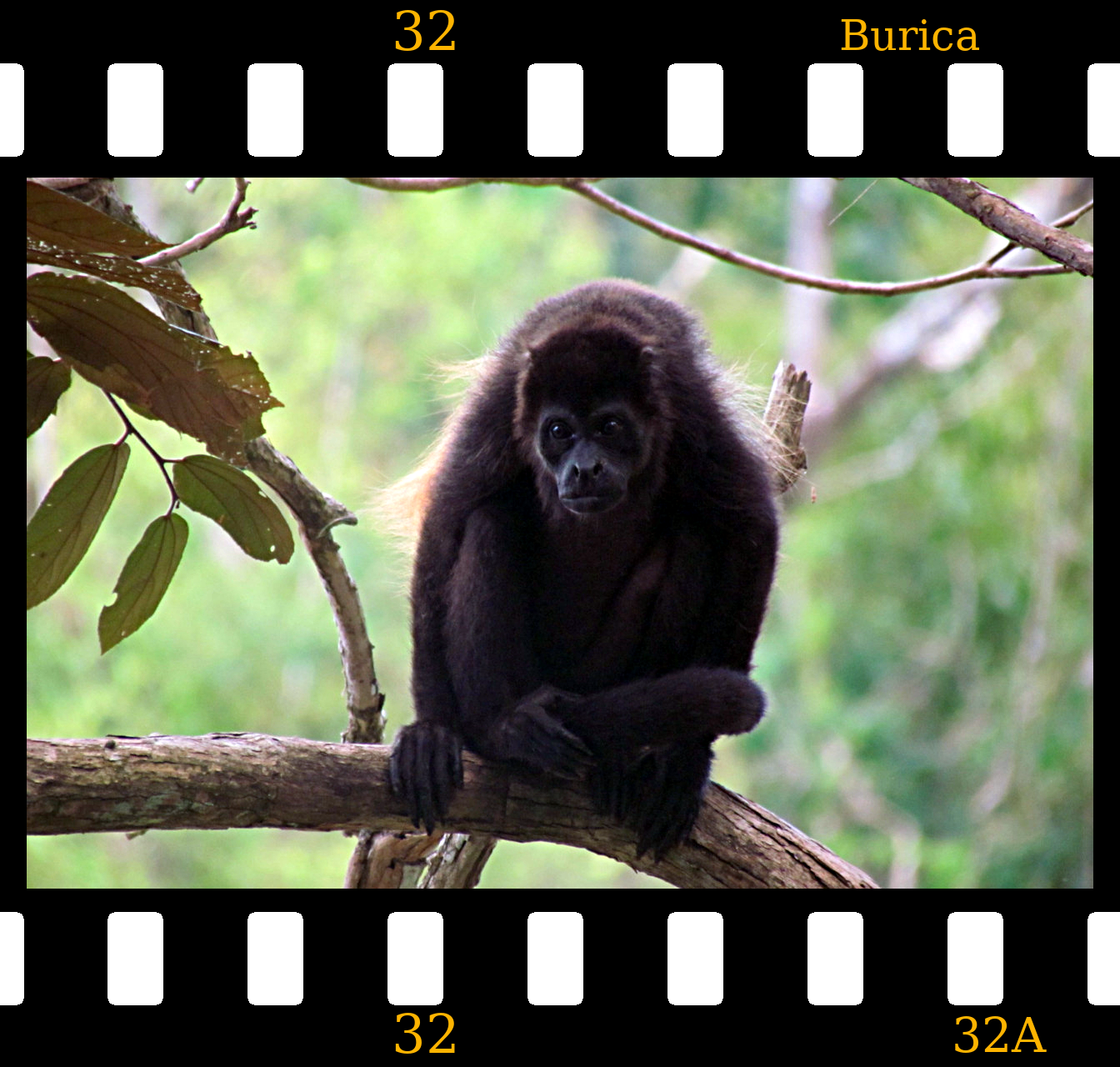
Las monas aulladoras también dirigen los coros de su tropa

Las hembras de una tropa de monos aulladores del Bosque de la Reserva Forestal Corpachí del Colegio Primer Ciclo de Punta Burica, también toman la iniciativa de hacer coros matutinos, los machos acompañan a las hembras en esta iniciativa.

En la grabación se escucha claramente que la iniciativa de mantener activo un coro matutino son las hembras.

En las mañanas cuando los aulladores amanecen en un buen ambiente y con numerosos miembros, son capaces de hacer 2, 3 o hasta 4 sesiones largas de aullidos como la que presentamos en los audios. Todos los audios corresponden a una misma sesión, la tercera sesión de la mañana.

No muy lejano de esta tropa se escuchaban tres tropas adicionales que también estaban en sesiones de coro. A la distancia el coro de las hembras no se escucha y sólo se escuchan los aullidos de los machos.

Es importante destacar que los coros de hembras son menos frecuentes en comparación con el coro de los machos, que son despliegues permanentes al amanecer y al atardecer y a veces durante otras horas del día.

A lo largo de todo el corregimiento de Limones en el distrito de Barú, los coros de aulladores matutinos nos recuerdan que los pedacitos de bosques que quedan son hábitat claves para muchas especies que requieren de bosques para sobrevivir a largo plazo.

Les instamos a deleitarse de los coros de aulladores con las hembras de protagonistas principales.

Tres audios de esa misma tropa e incluye audios de Saimiri combinados con aulladores. Un espectáculo natural.
Coro de monos aulladores + mono tití de la Reserva Forestal Corpachí

Monitorear, educar, conservar: El caso del mono tití chiricano

El mono tití chiricano o mono ardilla es considerado una especie en peligro. O sea, es una especie que está cercana a extinguirse en el país, si no se toman medidas de protección y la conservación de los bosques que necesitan para sobrevivir. Todas las personas y el Estado deben protegerle.

En Panamá, esta especie sólo existe en las tierras bajas de Chiriquí occidental, desde la cuenca del Río Chiriquí Viejo hasta la cuenca baja oeste del Río Chiriquí. La ganadería y la agricultura, las urbanizaciones y otros usos del suelo sin ordenamiento territorial han impactado en todos los bosques y poco queda de ellos, incluso en las orillas de ríos y quebradas.

Esta especie de mono depende de los parches de bosques naturales y los bosques continuos de las orillas de los ríos. En Chiriquí, la mayor parte de la población de estos monos se ha extinguido en los últimos 90 años. Sin bosques suficientes las poblaciones de primates y otras especies desaparecen irremediablemente.

Todos debemos ayudar a reforestar, de manera masiva, el área de distribución original de esta especie, especialmente en toda la Península de Burica, la Cuenca baja del Río Chiriquí Viejo, la cuenca baja del Río Chiriquí, la cuenca del Río Divalá, cuenca baja y media del Río Gariché, la cuenca media del Río Majagua, la cuenca del Río Platanal, la cuenca del Río Güígala, la cuenca del Río Escárrea, entre otros.

Somos la generación llamada a iniciar el proceso de recuperar de los bosques nativos, restaurar las cuencas, conectar los ecosistemas, salvaguardar la calidad de las aguas, proteger la diversidad biológica y promover un desarrollo sostenible, que impulse la calidad de vida, que nunca debe ser a costa de la sobre-explotación de la naturaleza.

Como humanos debemos custodiar la naturaleza de la cual todos somos parte y todos dependemos.

AYUDE A MONITOREAR Y CONSERVAR LOS PRIMATES

Necesitamos su ayuda como persona voluntaria para monitoreos y conservación de Primates en Chiriquí y para iniciar proyectos de conservación de biodiversidad y educación ambiental en las comunidades.

Usted tiene mucho que aportar. Contacte a Proyecto Primates Panamá y hágase colaborador o voluntario.

Si observa Primates nos escribe o chatea dando la información de rigor solicitada siguiendo las indicaciones del REPORTE o simplemente se comunica con el equipo de PP al correo o teléfono abajo desplegado.


Correo: ProyectoPrimatesPanama@gmail.com
Tel. & Whatsapp: +507 6592 7208

Dieta de especies vegetales del mono tití de Costa Rica, Saimiri oerstedii citrinellus y el mono tití chiricano, Saimiri oerstedii oerstedii

En un estudio de Wong (1990) en en el sector de Manuel Antonio en el Pacífico Central de Costa Rica, registró un total de 33 especies de vegetales que fueron consumidas por el mono tití de Costa Rica , de las cuales de 28 comieron los frutos y de 5 comieron el néctar (Tabla 1).

TABLA 1. Especies vegetales consumidas por el mono ardilla en el Pacífico Central de Costa Rica, sector Manuel Antonio.

FAMILIAESPECIENOMBRE COMÚNFRUTONÉCTAR
AnacardiaceaeAnacardium excelsumEspavéx
AnacardiaceaeSpondias mombinJobox
BignonaceaeTabebuia roseaRoble de sabana
x
MalvaceaeQuararibea asterolepisGarrochox
MeliaceaeTrichilia cuadrijugaCanfínx
MyrtaceaeEugenia sp.Guayabónx
MyrtaceaePsidium guajavaGuayabax
SapindaceaeTalisia nervosaMamón de montañax
MimosaceaeSwartzia simplexNaranjillox
MimosaceaeInga multijugaGuabax
MimosaceaeInga spectabilisGuaba grandex
MimosaceaeInga sp.Guaba de monox
RubiaceaePosoqueria latifoliaGuayaba de monox
MelastomataceaeMiconia argenteaLengua de vacax
MelastomataceaeMiconia schlimiiSanta Maríax
CecropiaceaeCecropia insignisGuarumox
MoraceaeFicus insipidaHiguerónx
MoraceaeFicus retusaHigox
MoraceaePseudolmedia spuriaCaciquillox
MalphigiaceaeByrsonima crassifoliaNancex
SapindaceaeMelicoccus bijugatusMamónx
RubiaceaeFaramea occidentalisCafecillox
ClusiaceaeSymphonia globuliferaCerilloxx
MimosaceaeClitoria javitensisBejucoxx
AcanthaceaeMendoncia retusaBejucox
MuntingiaceaeMuntingia calaburaCapulínx
MusaceaeHeliconia sp.Chichica
x
BignonaceaeMagfadyena uncataBejuco
x
AnnonaceaeXylopia sericophyllaYayox
RubiaceaeGuettarda sp.Jazmín
x
MalvaceaeOchroma pyramidaleBalsax
MusaceaeMusa acuminataBananox
MyrtaceaeSyzygium jambosPomarrosax

Mientras que un estudio realizado por Vargas (2003) en David, provincia de Chiriquí, Panamá registró que una tropa de S. o. oerstedii se alimentó de 20 especies de plantas con flores de las cuales de 19 comieron los frutos y de 1 comieron la flor (Tabla 2).
Vargas (2003) también observó a S. oerstedii consumiendo distintas clases de artrópodos homópteros, ortópteros, larvas de lepidópteros y arácnidos.

TABLA 2. Lista de especies de plantas con flores consumidas por S. o. oerstedii desde enero a octubre de 2002 en San Carlos, Chiriquí.

FAMILIA NOMBRE CIENTÍFICO NOMBRE COMÚN PARTE CONSUMIDA
F: Fruto o Fl: Flor
Sapotaceae Chrysophyllum cainito Caimito F
Moraceae Ficus aurea Higo estrangulador F
Moraceae Ficus americana Higo F
Moraceae Ficus trigonata Higo cimarrón F
Moraceae Ficus insipida Higuerón F
Moraceae Ficus paraensis Higo F
Myrtaceae Eugenia nesiotica Guayabillo, sequara F
Anacardiaceae Anacardium excelsum Espavé F
Flacourtaceae Laetia procera Manga larga F
Melastomataceae Miconia argentea Papelillo F
Moraceae Brosimum guianense Berbá F
Mimosaceae Inga punctata Guaba de mono F
Mimosaceae Inga multijuga Guaba F
Moraceae Coussapoa panamensis Matapalos F
Cactaceae Witia himantoclada Cactus F
Araceae Philodendron jacquinii Garras de León Fl
Myrtaceae Eugenia acapulcensis Capulín F
Cecropiaceae Cecropia peltata Guarumo F
Anacardicaceae Spondias mombim Jobo F
Araliaceae Dendropanax arboreus Palomo F

Lista de plantas consumidas por Saimiri oerstedii oerstedii en Corcovado, Costa Rica

El listado comprende unas 69 especies consumidas por el mono tití en los bosques mixtos de un sector del Parque Nacional Corcovado en 1983-1984 registrados por Boinski (1986). Consumió frutas de un total de 47 especies y néctar de un total de 22 especies. Sólo 3 especies le proveen tanto fruta como néctar (Ver Tabla).

TABLA 3. Especies de plantas consumidas por el mono tití chiricano (Saimiri oerstedii oerstedii) en el Parque Nacional Corcovado, Costa Rica.

FAMILIAESPECIEFRUTONÉCTAR
PiperaceaePiper friedrichshalliX
MelastomataceaeMiconia argenteaX
SolanaceaeLycianthes sp.X
CecropiaceaeCecropia obtusifoliaX
MyrtaceaePsidium guajavaX
MimosoideaceaeInga spp. (5 sp.)XX
RubiaceaePalicourea guianensisX
MelastomataceaeMiconia sp,X
VerbenaceaeCitharexylum virideX
RubiaceaeSabiceae villosaX
AcanthaceaeMendoncia spp. (2 sp.)XX
MusaceaeMusa sapientumX
VerbenaceaeVitex cooperiX
BombacaceaeQuararibea asterolepsisXX
CombretaceaeTerminalia catappaX
MelastomataceaeMouriri sp.X
GuttiferaceaeCalophylum longifoliumX
MoraceaeCastilla elásticaX
AnacardiceaeSpondias mombinX
MoraceaeFicus spp. (5 sp.)X
DilleniaceaeDoliocarpus sp.X
ConvolvulaceaeMaripa panamensisX

Unknown spp. ( 6 sp.)X
LauraceaeLauraceae sp.X
SterculiaceaeTheobroma cacaoX
PoligonaceaeCoccoloba sp.X
SterculiaceaeHerrania purpureaX
AnacardiceaeAnacardium excelsumX
AraceaeSyngonium sp.X
RubiaceaeRubiaceae spp. (2 sp.)X
AraceaeAnthurium sp.X
SolanaceaeSolanaceae sp.X
MusaceaeHeliconia latispatha
X
GuttiferaceaeSymphonia globulifera
X
CombretaceaeCombretum sp.
X
PassifloraceaePassiflora elata
X
MalvaceaeMalvaviscus sp.
X
PassifloraceaePassiflora vittifolia
X
MusaceaeHeliconia wagneri
X
BombacaceaeOchroma lagopus
X
RubiaceaePentagonia macrophylla
X
RubiaceaePosoqueria latifolia
X
PapilionoideaeMacuna sp.
X
MusaceaeHeliconia imbricata
X
BignonaceaeArribea spp. (2 sp.)
X
BignonaceaeTabebuia spp. (2 sp.)
X
MalphigiaceaeStigmaphyllon sp.
X
GuttiferaceaeClusia odorata
X
CucurbitaceaeGurania sp.
X
ApocynaceaeApocynaceae sp.
X
DesconocidaDesconocida (2 spp.)
X

Esta tabla sigue la sistemática de plantas de 1986.

REFERENCIA

Wong, Grace. 1990. Uso de hábitat, estimación de composición y densidad poblacional del mono tití (Saimiri oerstedii citrinellus) en la zona de Manuel Antonio, Quepos, Costa Rica. Tesis de Maestria. Programa Regional en Manejo de Vida Silvestre para Mesoamerica y el Caribe. Universidad Nacional. Costa Rica. 78 pp.

Vargas, Géminis. 2004. Ecología y Comportamiento de una Tropa de Mono Ardilla, Saimiri oerstedii R. (Primates: Cebidae) en un Bosque Ribereño de Chiriquí, Panamá. Tesis de Licenciatura en Biología. Universidad Autónoma de Chiriquí. 131 pp.

Boinski, S. 1986. The Ecology of Squirrel Monkeys in Costa Rica. Dissertation. University of Texas at Austin. 218 pp.

PD. Los nombres científicos y familias han sido actualizados la sistemática de la fecha de la edición (27.1.2019).

Día Mundial de la Educación Ambiental – Filosofía

El 26 de enero es el Día Mundial de la Educación Ambiental. Se conmemora en esta fecha ya que en 1975 se publicó LA CARTA DE BELGRADO durante el Seminario de Educación Ambiental realizado en la ciudad de Belgrado, capital del antiguo Estado de Yugoslavia. En esta carta se plasmó por primera vez los objetivos fundamentales de la Educación Ambiental dentro del marco de las Naciones Unidas.

LA CARTA DE BELGRADO indicó que se requería universalizar una ética más humana con actitudes y comportamientos para individuos y sociedades cónsonas con el lugar de la humanidad dentro de la biosfera.

Metas ambientales

La meta en esa fecha fue la de «llegar a una población mundial» para que adquiriese conciencia del medio ambiente y empatía hacia éste y sus problemas con tal de adquirir conocimientos de los problemas ambientales y asumir liderazgo para prevenir y solucionar dichos problemas.

Los objetivos marco de la EA de la Carta de Belgrado son:

  1. Conciencia
  2. Conocimientos:
  3. Actitudes
  4. Aptitudes
  5. Capacidad de evaluación
  6. Participación

Destinatarios

El destinario principal de la EA es el público en general, especialmente el formal y el no formal. En el siglo XXI hablamos de otras formas adicionales de Educación Ambiental como son la EA Informal y la EA comunitaria.

Los principios orientativos de los programas de Educación Ambiental propuestos fueron que:

  1. La EA debería tener en cuenta el medio natural y cultural
  2. La EA es un proceso contínuo y permanente
  3. La EA debe tener enfoque interdisciplinario
  4. La EA debe tener participación activa
  5. La EA debe tener visión global
  6. La EA debe centrarse en situaciones ambientales actuales y preveer los problemas ambientales futuros.
  7. La EA debe estar inmersa en cada aspecto del desarrollo
  8. La EA debe fomentar la cooperación local, nacional e internacional para solución de los problemas ambientales.

En tiempos actuales ya del siglo XXI estos paradigmas no han cambiado y no deben cambiar, se han mejorado y ahora es más diverso el discurso que incluye con nuevas palabras lo que son los Objetivos del Desarrollo Sostenible y la necesidad de una nueva cultura ambiental que justamente nos lleve a comprender lo que la Carta de Belgrado nos lo ha indicado desde 1975.

Nuestra propuesta es que la educación ambiental sea parte de la Educación para la Sostenibilidad ya que los problemas ambientales del planeta no están desligados de las aspectos sociales y económicos de las naciones que si bien la Carta de Belgrado sí los visualizó en el camino tomaron rumbos separados y es una de la razones que no lo terminan de asimilar los diversos actores sociales.

Ariel Rodríguez-Vargas
Proyecto Primates Panamá